Micromanagement Doesn't Raise Code Quality
Why micromanagement fails to improve code quality — and how a holistic approach flips the Pareto principle in your favor.
Micromanagement doesn’t raise code quality. Spoiler: it actually makes it worse.
I know the picture. New CTO, first weeks, fresh perspective — and then the moment you scroll through your organization’s repositories for the first time. Nested methods. Files with three thousand lines of code. Classes named by random chance. Anti-patterns wherever you look. The impulse is immediate: this needs to change. And it needs to change now.
What happens next decides everything.

The first impulse is the wrong one
Most managers in this situation do the obvious thing: they assign someone. The tech lead, the team lead, the senior engineer. Please put together an action plan to address the identified code issues. In writing. By Friday.
That feels like leadership. It isn’t.
What’s happening here is micromanagement — in its most unproductive form. The manager invests time searching, documenting, communicating, and following up. The engineer invests time drafting a plan for problems the manager found. In the end, the identified code gets improved. Maybe. And then what?
Then there’s the rest of the code. The parts the manager didn’t find. The new features being built to the same standard as the old ones. The system that keeps running exactly as before — just with a few cleaner methods in places nobody looks at anymore.
The Pareto principle — but working against you
We all know it: 20% effort, 80% results. The Pareto principle as a productivity promise. Micromanagement flips the ratio.
80% effort for 20% results.
The manager searches, writes, follows up, checks, escalates. Every hour spent browsing repositories is an hour not invested in strategic work. Every message sent causes context switching, interruption, and friction on the receiving end. And the result? A few improved methods. Isolated. Non-scaling. Non-sustainable.
That’s not leverage. That’s a hole where energy disappears.
There’s another effect many managers underestimate: the transfer of responsibility. When the manager finds the problems and hands out the tasks, they implicitly take ownership of quality. The engineer thinks: the boss tells me what to fix — so the boss must know what good looks like. The team stops thinking for itself. It waits for the next inspection.
That’s the real tragedy of micromanagement: it produces the exact opposite of what it’s trying to achieve.
Why this is especially damaging in creative work
Software development isn’t assembly line work. You can’t control from the outside whether someone is currently thinking through a good algorithm. You can’t track whether someone considered the right abstractions while writing a class. Code takes shape in the mind long before it appears on screen.
People who work under observation and pressure work worse. If you think that’s an opinion: it’s psychology. But I get it if that’s uncomfortable. Creative work requires psychological safety, room to experiment, tolerance for mistakes. Micromanagement signals the opposite: I don’t trust you. I need to check up on you. Your work isn’t good enough.
Frustration. Demotivation. Quiet quitting. The sequence is always the same.
And then the manager sits there, wondering why quality isn’t improving, and tightens the controls a little more. I know a CTO who personally went through the commit log every month and left comments on tickets. The tickets got resolved. Quality didn’t improve. He stopped understanding why — and wrote more tickets.
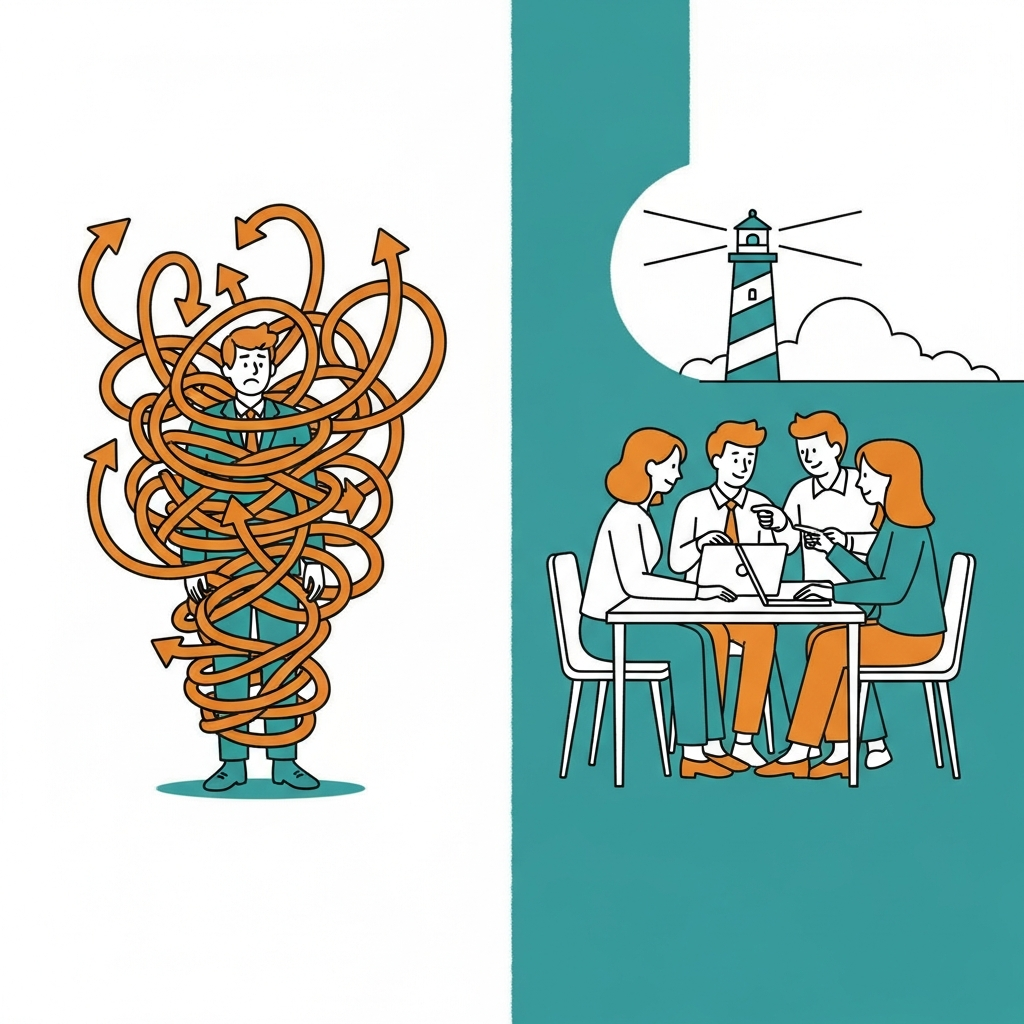
The holistic approach — or: how to flip the Pareto principle
So what actually works? An approach that isn’t isolated and reactive, but systemic and preventive. An approach that addresses causes, not symptoms.
Here’s the uncomfortable truth: a team can only deliver code at the level its knowledge and company culture support. If the team is mostly junior developers, the code will look like it. If the culture rewards heroes — the ones who ship features without regard for quality — then quality will be sacrificed permanently. No manager in the world can compensate for that through control. Not long-term.
What helps:
Anchor quality as a first-class value. Not as lip service in an all-hands meeting. Structurally. Quality needs to play the same role in goals, in reviews, in conversations about priorities as feature development. As long as bonuses are tied to ship rate rather than technical debt reduction, the team will deliver what gets rewarded.
No heroes. Teams. Heroes are a symptom of a dysfunctional culture, not a solution. When one person rescues what others botched, you don’t get quality — you get dependency. What’s needed are teams with shared ownership over what they deliver. Jointly responsible means: jointly proud, jointly embarrassed, jointly learning.
Carve out time for refactoring — non-negotiable. This is where many fail. It sounds so reasonable, but in practice refactoring always gets pushed. Next sprint. After the launch. When we have more capacity. The capacity never comes.
Without time, developers default to shortcuts. Not because they’re lazy, but because the pressure is too high. Under pressure, people find the fastest way out. That’s not a character flaw, that’s neurology. If you don’t make time for quality, you don’t get quality. Always. Without exception.
Pair programming and mob programming as knowledge transfer. Code reviews on the principle of “I’ll take a quick look and leave three comments” don’t scale. What scales is working together. Pair programming is expensive per hour and cheap per unit of competence gained. A junior who spends two weeks pairing with a senior learns more about clean code than in six months of solo work with occasional feedback.
Mob programming — the entire team working on one task — sounds absurdly inefficient. In practice, it creates alignment on coding principles that can’t be achieved any other way. When five people collectively decide how a class should be structured, all five carry that same mental model afterward. That scales.
Hire lighthouse developers. A lighthouse developer is the person juniors voluntarily go to with questions — because they walk away feeling smarter, not smaller. That’s rarer than you’d think.
It can also make sense to bring in external software craftsmanship coaches. Coding katas, guided refactoring sessions, TDD workshops — not as a one-off event, but as an ongoing offer. I spent too long thinking I needed to control this myself. Until I realized: if the team knows it, I don’t need to know it.
The Pareto principle — now working for you
Activate these levers and you invest 20% of the effort into structures and culture, and get back 80% of the results in the form of self-improving code quality.
Not because the manager checks every commit. But because the team itself knows what good code looks like, has time to write it that way, and operates in a culture that rewards it.
That’s the difference between scaling and Sisyphean labor. Micromanagement means rolling the boulder up the hill every single day. Investing in culture and competence means building a ramp — and the boulder stays up.

What this means in practice
For a manager who’s in that situation right now — new company, first look at the repositories, the impulse to take control is right there — there’s one simple question that decides everything:
Do I want to solve the problem or treat the symptoms?
Treating symptoms looks like this: request an action plan, fix the identified code, schedule the next inspection. Result: isolated improvement, high personal effort, no lasting effect.
Solving the problem looks like this: understand why the code is the way it is. What incentives exist? What knowledge is missing? What time is missing? Then systematically work on those root causes — not the symptoms.
That takes longer. The first results won’t be visible in two weeks. But after six months, the picture has fundamentally changed — because the team itself works differently, not because the manager controls it differently.
Blunt conclusion
Micromanagement isn’t sustainable. It isn’t scalable. It isn’t leadership.
It’s a lever pulling in the wrong direction — with high personal energy expenditure and minimal collective results. Anyone who operates this way long-term burns out. So does the team.
The way out isn’t less control — it’s a different kind of responsibility. The responsibility to create structures where good work is possible and probable. Not forced. Possible.
The boulder stays up. But only if the manager stops carrying it.